
PhytoMem One: editorial review at a glance
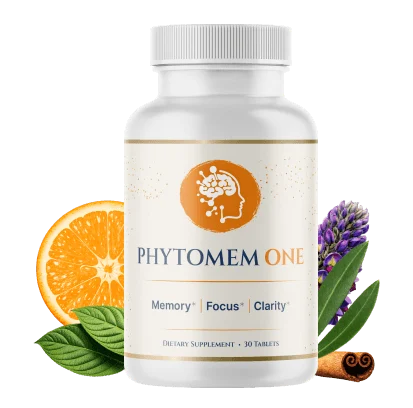
PhytoMem One is marketed as a once-daily dietary supplement for memory, focus and clarity. The brand describes a ten-ingredient formula divided into cellular-defense, brain-fuel and neural-amplifier groups. The supplied front-of-bottle artwork identifies 30 tablets per bottle, while the seller FAQ recommends one daily serving with food.
Our examination separates attractive positioning from verifiable evidence: a product page listing ten substances is not the same as a complete quantitative Supplement Facts label, nor does it establish that the finished blend improves memory or treats cognitive conditions. The individual ingredient amounts were not available on the reviewed seller page.
The brand’s current package presentation lists two bottles at $158, three at $207 and six at $294, with a 60-day return promise and three free digital ebooks displayed. We verify what is advertised, but the live seller checkout controls the final total and fulfillment terms.
What is PhytoMem One?
The seller positions PhytoMem One as an adult brain-wellness supplement rather than a prescription medicine. Its advertising emphasizes memory, mental sharpness and focus, drawing on botanicals, seaweed extracts, metabolic ingredients and a citrus-derived extract. A seller claim of cognitive support should be described as a marketing claim unless the finished formula has been appropriately tested.
The product is sold as a bottle of 30 tablets according to the supplied image. The seller FAQ uses the phrase “one capsule daily with food”; that discrepancy should be checked on the actual package. The seller also describes the formulation as stimulant-free and non-GMO, without the review independently verifying certification.
A consumer can separate three questions: what is listed, how the brand says it works, and whether research confirms a clinically relevant benefit. This site explores each question on its own page to avoid collapsing different search intents into an oversized sales pitch.
How does the seller say the formula works?
The presentation describes a cellular-defense matrix (saffron, fucoxanthin, fucoidan and oleuropein), a brain-fuel group (berberine, cinnamon, banaba corosolic acid and kudzu flower), and an amplifier group (Morosil and xylitol). These categories describe the brand’s explanation of its intended design.
Antioxidant activity, glucose metabolism and neural signaling are real scientific topics. But mechanistic studies do not establish that this particular supplement repairs nerve tissue, restores memory, prevents dementia or removes microplastics from the brain. Those outcomes would require independently interpretable human trials of the actual formula.
The research distinction matters most where promotional language suggests a medical transformation. The National Institute on Aging cautions against unproven memory remedies and recommends medical assessment for persistent cognitive change.
Explore the full mechanism and evidence analysis →
Ingredients: ten names, three formula groups
The brand lists saffron extract, fucoxanthin, fucoidan, oleuropein, berberine HCl, Ceylon cinnamon, corosolic acid from banaba leaf, kudzu flower extract, Morosil red-orange extract, and xylitol. These names identify broad ingredient categories, but multiple preparations of the same botanical can have different compositions and study profiles.
The public seller presentation reviewed here does not give ingredient-specific milligram amounts. That prevents responsible quantitative comparisons with studies of berberine, cinnamon, saffron or the other substances. We have not inserted invented values or suggested the blend has been clinically validated as a whole.
| Seller-listed ingredient | Type | Per-serving quantity |
|---|---|---|
| Saffron Extract (Crocus sativus) | orange-red flower stigmas | Not provided as an individual amount on the reviewed seller page |
| Fucoxanthin (Brown Seaweed Pigment) | marine carotenoid | Not provided as an individual amount on the reviewed seller page |
| Fucoidan (Brown Seaweed Polysaccharide) | sulfated polysaccharide | Not provided as an individual amount on the reviewed seller page |
| Oleuropein (Olive Leaf Extract) | olive-derived polyphenol | Not provided as an individual amount on the reviewed seller page |
| Berberine Hydrochloride | alkaloid botanical extract | Not provided as an individual amount on the reviewed seller page |
| Ceylon Cinnamon Bark (Cinnamomum verum) | cinnamon botanical | Not provided as an individual amount on the reviewed seller page |
| Corosolic Acid (Banaba Leaf) | banaba botanical compound | Not provided as an individual amount on the reviewed seller page |
| Kudzu Flower Extract | flower isoflavones | Not provided as an individual amount on the reviewed seller page |
| Morosil (Sicilian Red Orange Extract) | red-orange extract | Not provided as an individual amount on the reviewed seller page |
| Xylitol | sugar alcohol | Not provided as an individual amount on the reviewed seller page |
This is an ingredient-name table from the seller presentation, not a reproduction of an unavailable complete Supplement Facts panel.
Read the ingredient-by-ingredient analysis →
Benefits: advertised features versus independent evidence
The seller promotes support for memory, focus and mental clarity. It also emphasizes everyday convenience, a natural formula and no stimulant ingredients. Those points help describe the offer, but do not constitute objective evidence that every purchaser will experience measurable improvement.
NIA discusses movement, health-condition management, diet, sleep and review of medicines as important to healthy aging. That broader context should not be replaced with a promise that a supplement reverses cognitive decline. A validated product-level trial would be needed to support specific claims of cognitive improvement.
Who should review safety first?
The ingredient list includes berberine, cinnamon, olive-leaf compounds, corosolic acid and other botanicals. NCCIH notes that berberine may interact with medicines and should be avoided in pregnancy and breastfeeding. A person using medicines for diabetes, blood pressure, transplants or other chronic conditions should discuss the actual label with a qualified clinician or pharmacist.
New or progressive memory changes can have causes unrelated to supplement shopping. If forgetfulness is persistent, affects daily functioning or appears suddenly, a medical evaluation is more important than choosing a larger bundle. Our review is not a diagnosis and does not substitute for medical care.
Read the complete safety assessment →
Pricing, package images and bonuses
The seller currently advertises three bundles: 2 bottles at $79 each, 3 bottles at $69 each and 6 bottles at $49 each. The photos below are the actual package images supplied for this website. They include promotional ebooks and seller badges, not proof of outcomes.
Current brand material shows three digital guide bonuses with the displayed packages, free US shipping with 3 or 6 bottles, and a 60-day refund promise. All quoted amounts and terms should be rechecked in the current payment flow.
Choose from three visual bottle bundles
These package images were supplied for this website. Prices, shipping and ebook inclusion reflect the reviewed brand presentation; verify the offer and final total in the seller checkout.
2 Bottles
About 60 days at seller directions
$79per bottle
Advertised total: $158
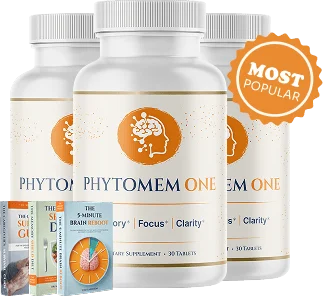
3 Bottles
About 90 days at seller directions
$69per bottle
Advertised total: $207
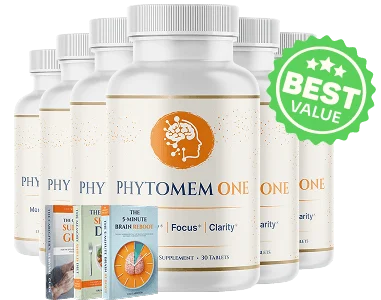
6 Bottles
About 180 days at seller directions
$49per bottle
Advertised total: $294
The seller currently advertises the three free ebook guides for each displayed package. Product contents and checkout terms are subject to the seller’s current order page. See bonus images and guides →
Pros and Cons: a buyer-focused assessment
On the plus side, PhytoMem One has a readily identifiable formula concept, a seller-published list of ten ingredients, straightforward 30-tablet packaging imagery, bundle choices, a published guarantee and advertised ebook guides. Its stated goals—supporting recall, focus and general cognitive wellness—may interest readers researching this category.
Limitations include the absence of disclosed per-ingredient amounts in the offer presentation, potential medicine interactions involving berberine, and the lack of a verified finished-formula human trial in our research. These are reasons to ask practical questions, not statements that no buyer could ever find the product useful.
Read the detailed Pros and Cons →
What are the three digital guides?
The seller displays The Memory Shield Diet, The 5-Minute Brain Reboot and The Caregiver’s Survival Guide as free promotional ebooks. We have used the supplied book cover artwork on the dedicated bonus page and in the appropriate package images.
The cover wording is promotional. It does not itself establish that a dietary pattern can protect against a specific brain toxin, or that a five-minute routine treats cognitive disease. Use the guides as optional educational material and evaluate medical claims separately.
Three ebook guides with the displayed offers
The brand page currently describes all three as free with its listed packages. Their promotional titles are not evidence that the finished supplement prevents or treats illness.

The Memory Shield Diet
Nutrition-focused promotional guide; its cover does not demonstrate disease prevention.
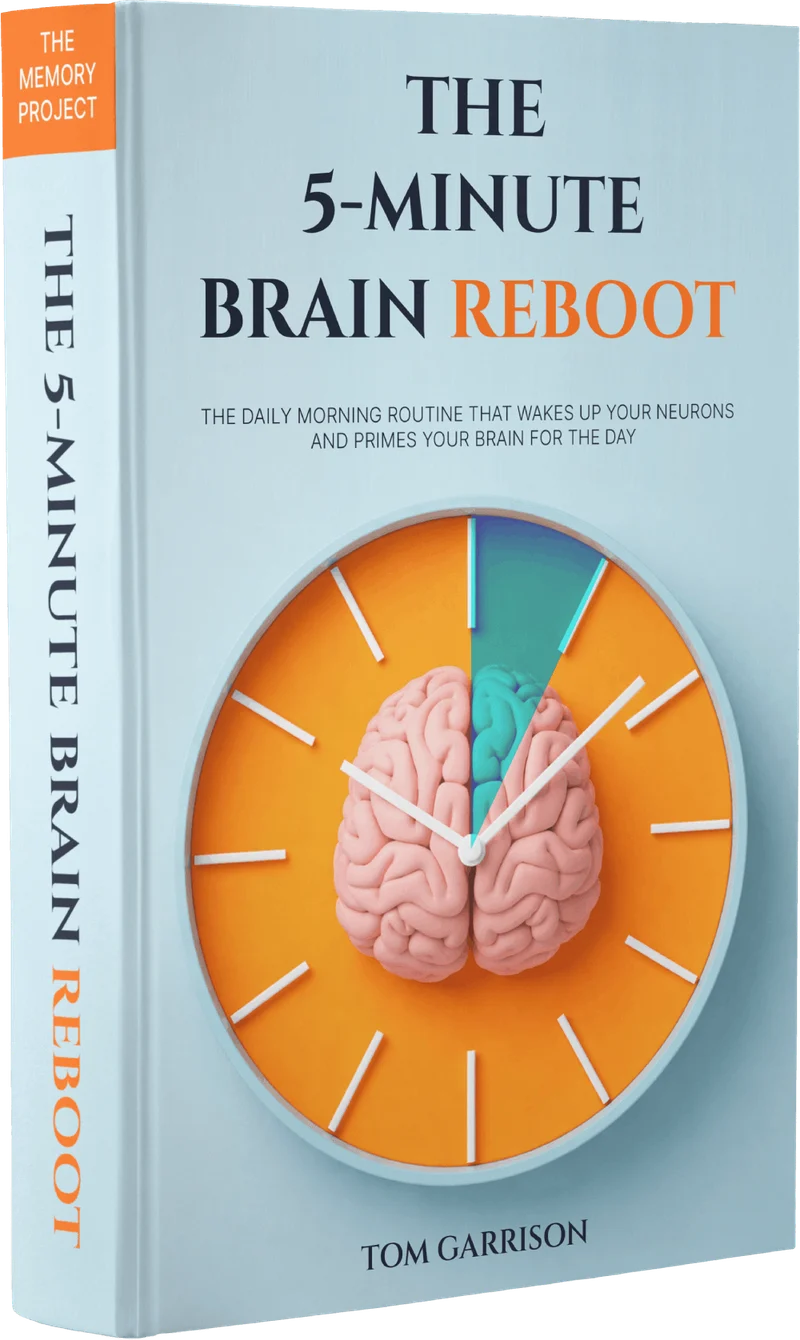
The 5-Minute Brain Reboot
A seller-offered daily-routine guide addressing focus and mental alertness.

The Caregiver's Survival Guide
A family and caregiver educational resource advertised with the product bundles.
Buying checklist and our conclusion
Before ordering, confirm the correct full Supplement Facts label, any personal medication interactions, the package total, shipping to your address, digital-guide inclusion, and the 60-day refund process. Keep the seller receipt and review the offer’s current terms. An independent affiliate page cannot lock in a future checkout price.
PhytoMem One presents an organized ten-ingredient wellness concept and three clear bundle options. Our editorial position is that buyers deserve access to the actual ingredient amounts and product-specific outcome evidence before assuming dramatic memory-related promises. The formula can be discussed as a seller-advertised supplement, not a proven treatment for memory disorders.
We have not personally tested the product, independently validated its manufacturing claims, or invented customer ratings. If you decide to explore the brand’s offer, use a current ingredient label and your healthcare context rather than relying exclusively on marketing copy.
Frequently asked questions
The questions below cover the most common distinctions between published seller information and clinical evidence. Detailed answers, including supply, refunds, ingredients and FDA status, are available on the dedicated FAQ page.
What is PhytoMem One?
PhytoMem One is a dietary supplement advertised for adult memory, focus and mental clarity. The seller lists ten ingredients and a once-daily routine; this is not a medicine for dementia or other diagnosed cognitive conditions.
What are the ten ingredients?
The seller lists saffron, fucoxanthin, fucoidan, oleuropein, berberine HCl, Ceylon cinnamon, corosolic acid (banaba), kudzu flower, Morosil and xylitol. Individual doses were not available on the reviewed sales page.
How do I take PhytoMem One?
The current seller FAQ says one capsule daily with food, while supplied packaging shows 30 tablets. Check your actual bottle for final directions and formulation before use.
Does it improve memory?
The seller markets support for memory, focus and clarity. We have not verified an independent randomized trial of the complete finished formula establishing those specific outcomes.
Can PhytoMem One prevent Alzheimer’s disease?
No supplement should be represented as preventing or treating Alzheimer’s without appropriate evidence and regulatory authorization. NIH advises caution about memory-enhancement product promises; persistent changes in cognition warrant medical evaluation.
Is it FDA approved?
The FDA does not approve dietary supplements for safety and effectiveness before marketing. Facility registration or manufacturing standards are not the same as FDA product approval.
Is it safe with diabetes medicines?
Because it contains berberine and several metabolic-oriented botanicals, review the formula with your prescriber or pharmacist before combining it with glucose-lowering or other medicines.
What a complete Supplement Facts panel would add
A polished ingredient illustration is not the same as a quantitative panel. For this product the seller names ten substances, while the front-of-bottle asset identifies 30 tablets. The outstanding pieces for an exact science comparison are each ingredient’s amount, extract standardization and a complete list of other ingredients and warnings. This information is especially relevant to people who take medications, use several supplements or need to check an allergy.
A clinician reviewing a multi-ingredient supplement may need to know whether the berberine portion resembles doses used in published studies or is substantially smaller. Without an exact value, it would be misleading to calculate expected interactions or effects from research tables. Even when a full label later becomes available, an ingredient dose does not establish an outcome for the combination.
Packaging and the seller FAQ also differ in terminology: the provided front illustration identifies tablets, while the FAQ describes one capsule daily. That could reflect a wording mistake or a packaging update. We are leaving it visible as a buyer verification point, not inventing a new serving instruction. The label on the purchased item should control.
Understanding research quality beyond ingredient lists
The strongest study for a product-specific memory claim would evaluate the actual commercial combination, identify its quantitative formula, randomize an appropriate sample, and use validated cognitive outcome measures with a suitable control group. Results would need to account for baseline differences, adverse events, follow-up duration and potential biases. A product-level claim cannot be established simply by citing one paper about each of ten botanicals.
Much of the general literature on compounds such as seaweed pigments, polyphenols and glucose-related botanical extracts concerns mechanisms or biomarkers. Those observations may motivate better studies. They do not demonstrate that a tablet improves recall, treats a diagnosed disorder or has a specific effect on a person’s brain. A trial of blood glucose control in people with diabetes, for example, is not a memory trial in healthy adults.
The National Institute on Aging advises caution about products that claim memory enhancement or prevention of brain disorders. It highlights cognitive-health measures including sleep, physical activity, health-condition management and medical assessment of concerning changes. These recommendations are informative context rather than an endorsement of or prohibition on one branded product.
A practical buyer comparison: claims, transparency and cost
To compare this offer with other supplements, create three separate columns. First, list commercial facts—bottle count, advertised per-bottle price, shipping and refund window. Second, record ingredient identity and amounts from the current actual label. Third, record the quality of studies supporting the specific outcome claimed. Keeping these categories separate prevents a low per-bottle price or generous promotion from standing in for clinical evidence.
The 2-bottle bundle has the lowest upfront subtotal at $158 among the three options displayed; the six-bottle selection has the lowest advertised unit price at $49 but costs $294 upfront. The three-bottle offer sits between them at $207. Larger bundles may be economical for someone who has already established the product is suitable, but cost savings do not resolve ingredient or medication questions.
Each package currently advertises three digital ebooks. These may be interesting bonus resources but are not independently verified clinical interventions. The books’ covers include strong language about brain health. Their promotional wording should not be read as proof that the tablet or the ebooks can prevent Alzheimer’s, remove microplastics or restore neurological function.
Regulatory terms and claims that deserve precision
The FDA does not approve dietary supplements for safety and efficacy before marketing, as it does for many drugs. Statements about a facility following manufacturing practices, or a supplier using organic handling procedures, should not be shortened into “FDA-approved product.” If a seller claims a particular manufacturing certification, a careful reviewer should name precisely what was claimed and seek supporting documentation.
FTC guidance states that objective health claims must be truthful, not misleading and supported by adequate evidence. Saying “the seller says” properly identifies the source of a statement, but does not automatically make an unsupported medical claim acceptable. This editorial project describes the brand’s advertised memory, clarity and focus positioning without adopting extraordinary promises about curing or reversing disease.
Our articles use the supplier page for commercial and formula-description facts, and public health sources for broader evidence and safety context. We do not invent a doctor endorsement, clinical trial, survey count, star rating or guaranteed individual experience. That approach matters when the review is designed to compete on quality rather than only on keyword repetition.
References & research notes
Brand statements are attributed to the seller. Public-health and scientific sources explain general evidence; they do not endorse or clinically validate this finished product.
- PhytoMem One brand offer and ingredient descriptions
- NIH National Institute on Aging: Cognitive Health and Older Adults
- NIH National Institute on Aging: Memory Problems, Forgetfulness, and Aging
- NCCIH: Diabetes and Dietary Supplements — Berberine and Safety
- NCCIH: Cinnamon — Usefulness and Safety
- FDA: Questions and Answers on Dietary Supplements
- FTC: Health Products Compliance Guidance
Explore the complete PhytoMem One research hub
Every linked page answers a distinct buyer question, from the label and benefits to pricing and refund terms.